Husband and wife develop AI patient consultation simulator for students


A husband-and-wife duo have developed their own AI Objective Structured Clinical Examinations (OSCE) simulator, designed to help pharmacy, medical and physician students practise patient consultations ahead of their exams.
SCRUB in was created by pharmacist Rob Rumney and his wife, physician associate, Molly, after their own experiences as pharmacy students and later teaching and professional roles revealed a troubling gap in student knowledge – how to communicate effectively with patients.
Lack of experience
Speaking exclusively to C+D, Rob said, “we were seeing a lot of pharmacy and medical students with little experience of speaking to patients. They’d done OSCEs but hadn’t spoken to patients outside of them and were in their fourth or fifth year coming up to graduation. Their consultation and communication skills had so much room for improvement.”
When students use SCRUB in’s patient simulator, they are provided with one of the platform’s pre-written case studies, containing details on the patient and their symptoms. The student has eight minutes to conduct a consultation with the virtual patient, which they can do by text or by speaking aloud through the programme’s live voice mode.
Read more: BREAKING: June registration pass rates revealed
“We’ve got a growing database of over 190 cases that we have written ourselves and we’ve written the mark scheme,” explained Rob. “The patients are brough to life using AI and animation. You can speak to someone, and it feels quite realistic and like the real thing.”
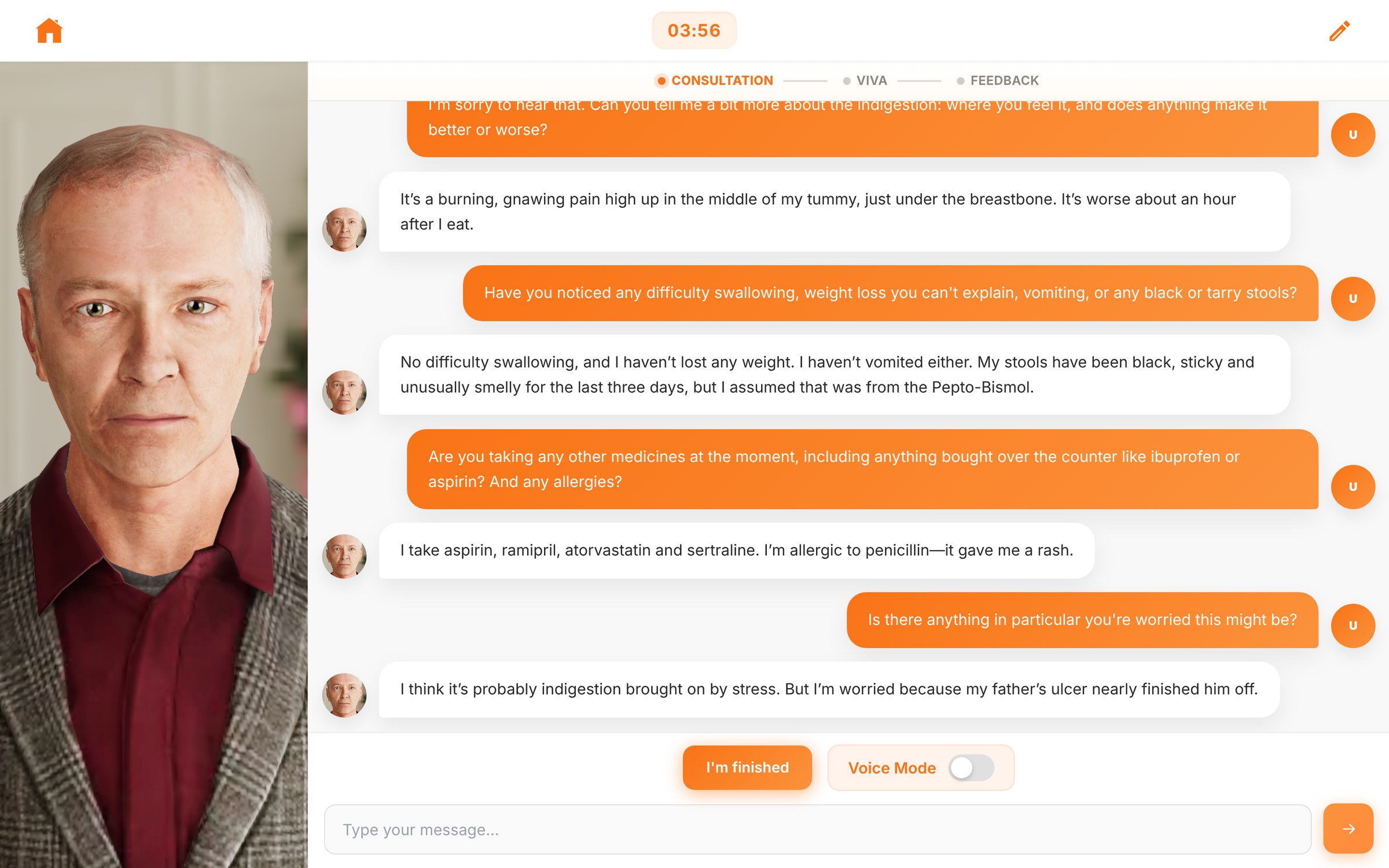
Following the consultation, an AI examiner will ask the student three questions about the diagnosis, any associated risks and condition management, before providing feedback and a score out of 40.
An “extra opportunity” for clinical practice
“We wanted to provide an extra opportunity for students to get clinical practice before they meet patients properly”, said Rob. “The opportunities to practice for the OSCEs at university are really slim. The only time you’re able to sit down with a physical person and get proper feedback is once during a mock and then during the OSCE itself.
Read more: Give pharmacy students full access to NHS funding, urges RCPharm
The platform also contains a peer practice mode, where students can practice with friends without the stress of marking answers, which the AI examiner will do, allowing them to focus entirely on the interaction.
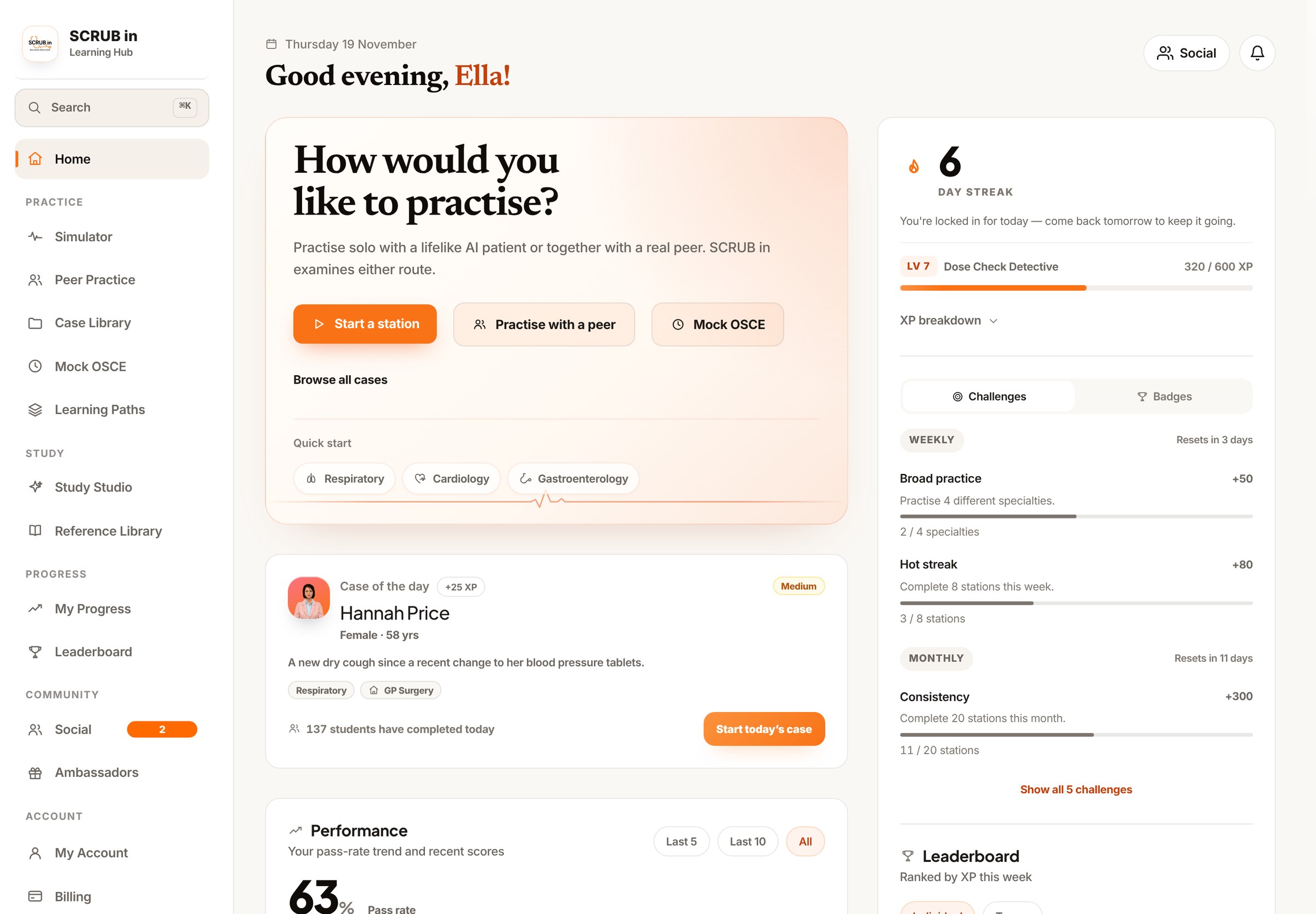
SCRUB in’s study studio allows students to upload their lecture materials and receive automatically generated flashcards and multiple-choice questions, while the social hub feature allows them to challenge friends and compete via leadership boards.
Pharmacy and medical societies can also purchase their own forum on SCRUB in, where members can organise revision sessions, upload resources and go through virtual cases together.
Self-taught
When Rob and Molly initially came up with the idea for SCRUB in last year, they approached several companies for help in developing it and were quoted £80,000 for a prototype.
“We thought, ‘We either give up or see if we can learn how to make it ourselves’,” explains Rob, “We used Google, Gemini, Chat GPT and Claude, all the resources we had, and we taught ourselves how to build [SCRUB In].
“I wouldn’t call us masterful web designers or anything like that. But we’ve built enough knowledge to build something that we think offers what we were trying to achieve”.
Read more: To be students’ first port of call, they need to know what we offer
There are three tiers of memberships starting from £4.99 a month for two live voice consultations, £9.99 for twenty and £19.99 for an unlimited amount.
While Rob described SCRUB in as a “passion project”, the central aim of the platform is to build student confidence.
“A step in the right direction”
“You can be the most book-smart person in the world and know all the answers and the questions to ask”, said Rob. “But if you can’t phrase them in a way which the patient will respond well to, you might not be able to get the information from them.
“SCRUB in is never going to replace speaking to a real human being, but it’s a lot better than just reading from a book. It’s a step in the right direction.”
Read more: Students almost twice as likely to ask AI for advice than a pharmacist
It comes after 83% of trainee pharmacists passed this June’s common registration assessment, the highest pass rate in six years.
And it follows the Royal College of Pharmacy calling upon the government to offer pharmacy students the same access to the NHS Learning Support Fund as other health professions and remove “unjust barriers to choosing pharmacy”.